
How to Enjoy Thanksgiving Dinner on a GLP-1 Medication (Without Feeling Sick or Falling Off Track)
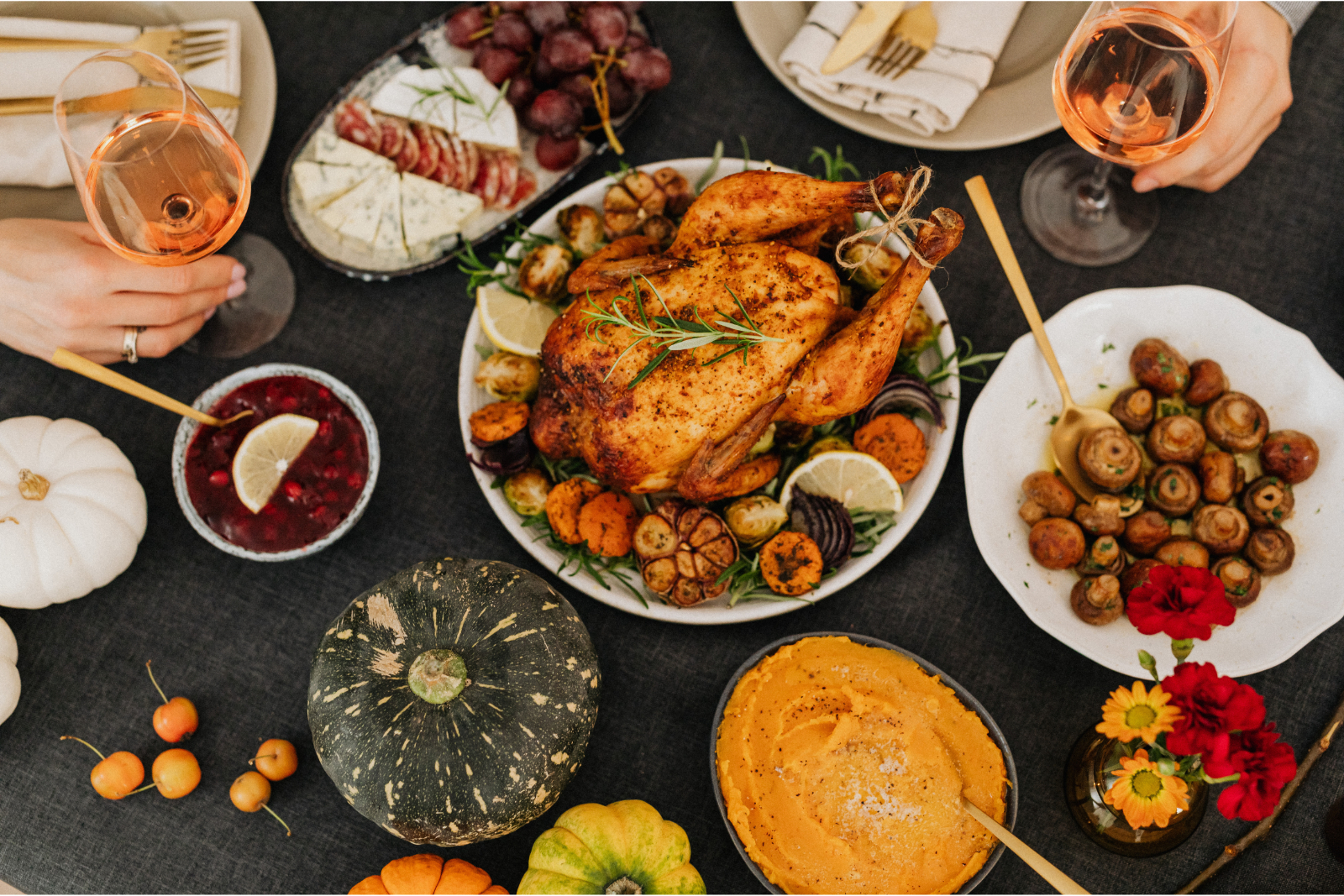
Thanksgiving is built around big plates, rich food and a lot of “just one more bite.” If you take a GLP-1 medication like Ozempic, Wegovy, Mounjaro or Zepbound, that setup can feel a little intimidating. Your appetite is quieter, your stomach empties more slowly, and a heavy meal that used to feel merely stuffed can now feel genuinely miserable.
The good news is that you can sit down at the table, taste your favorites and still feel good afterward. You do not have to skip the holiday, and you do not have to white-knuckle your way through it. You just need a plan that works with how your medication works.
This guide walks through what to do before, during and after Thanksgiving dinner, dish by dish, so you can enjoy the day and wake up Friday feeling like yourself.
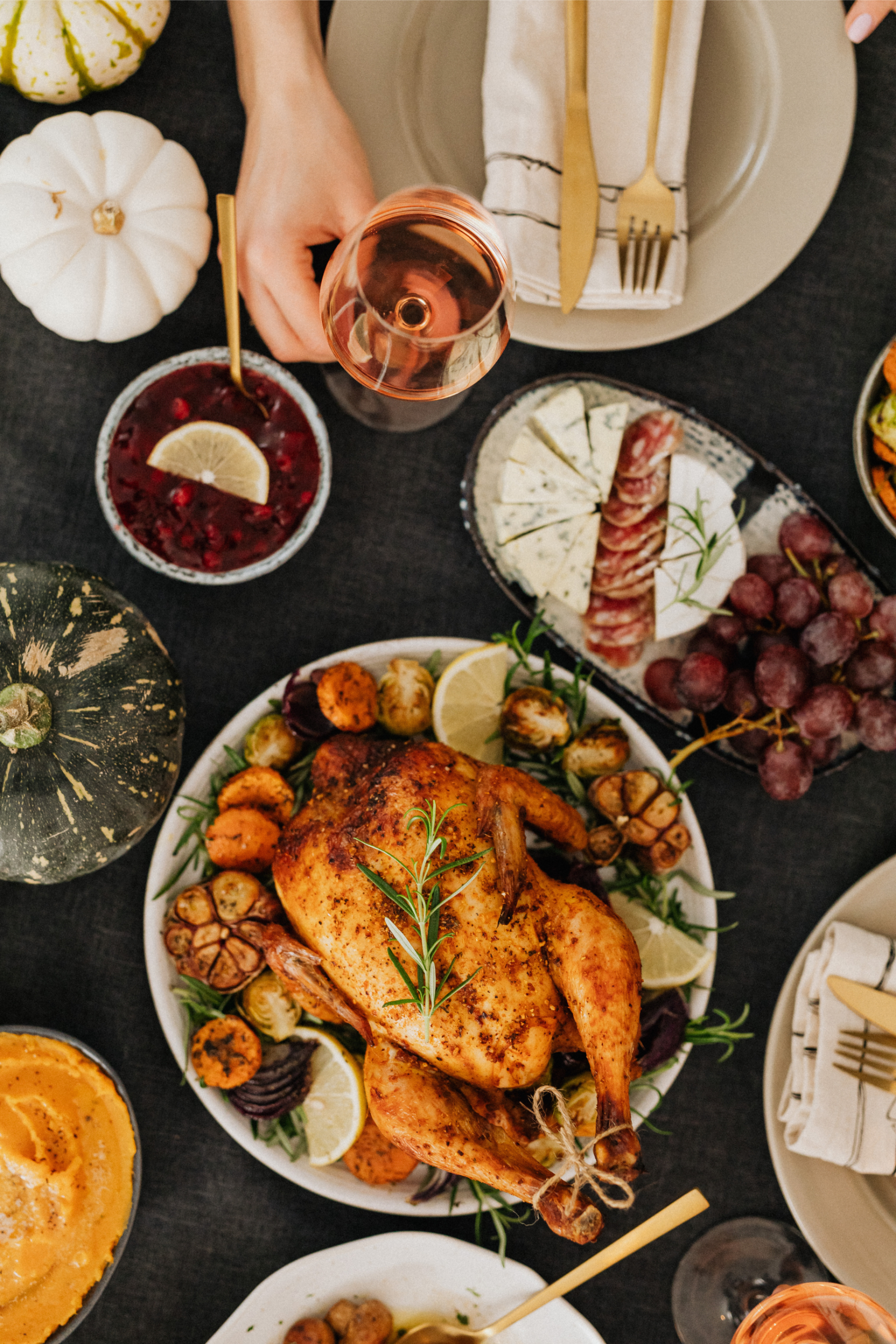
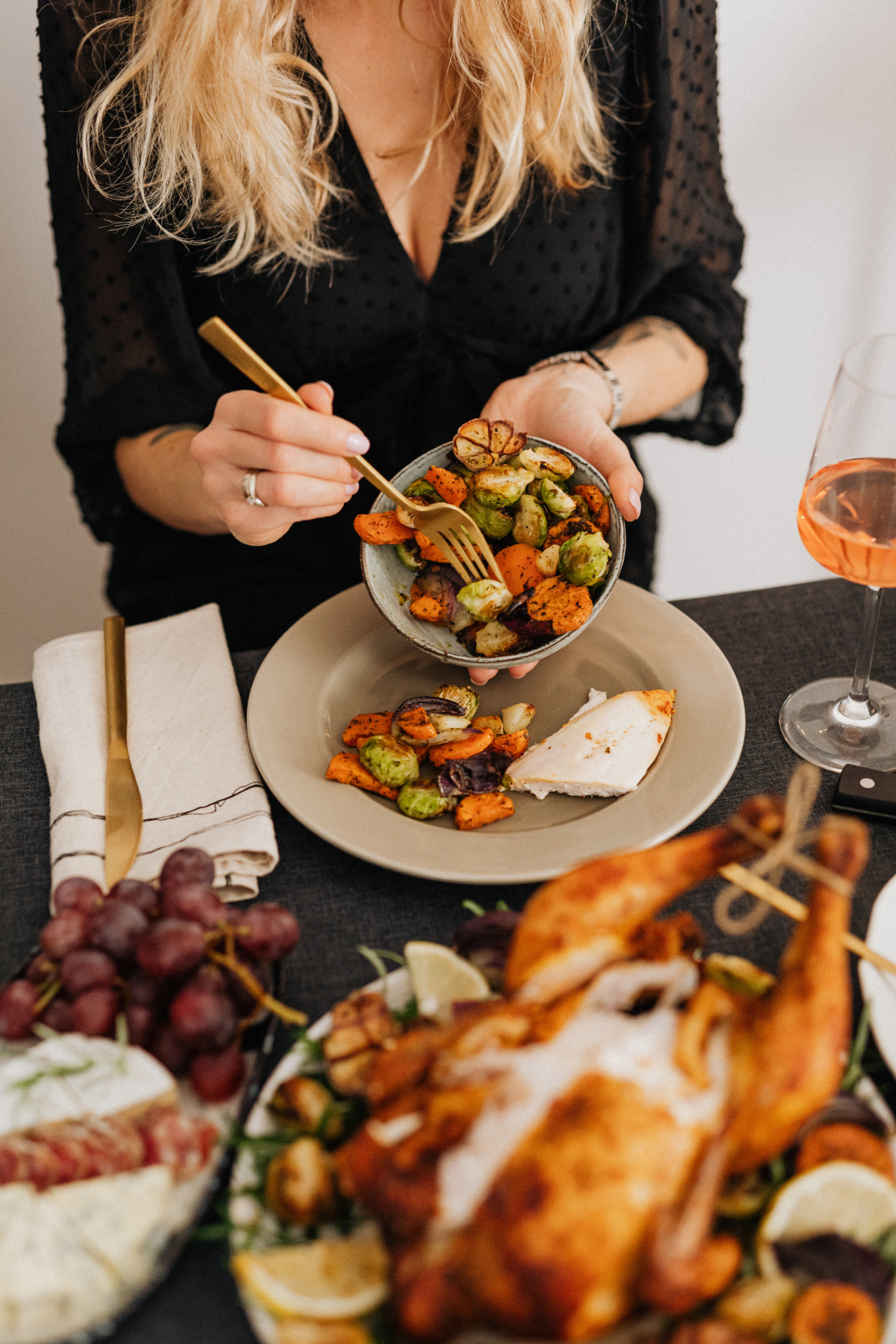
The Short Answer: Thanksgiving on a GLP-1 in 7 Steps
- Take your medication as prescribed. Do not skip a dose to make room for dinner.
- Eat small, gentle meals earlier in the day instead of saving up.
- Fill a small plate and start with protein.
- Go easy on fried, greasy, creamy and very sugary dishes.
- Eat slowly and pause between bites.
- Sip water all day and keep alcohol light or skip it.
- If you feel full, stop. Leftovers exist for a reason.
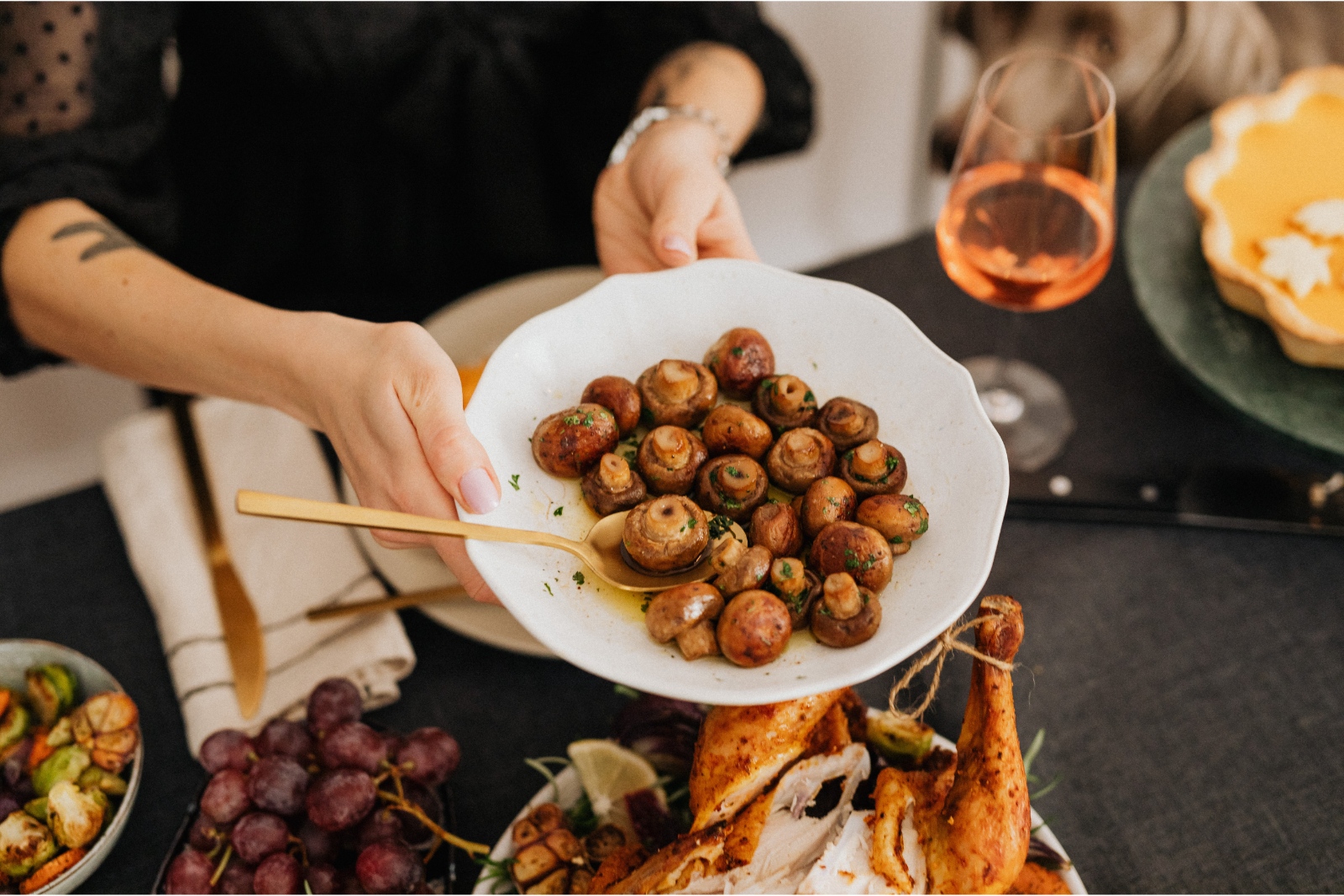
Why Thanksgiving Feels Different on a GLP-1
GLP-1 medications slow digestion and help you feel full sooner. That is the whole point, and it is why many people find they can’t finish portions they once polished off without thinking.
Holiday food is a tough match for that effect. Dishes tend to be larger, higher in fat and served in multiple courses. According to UC Davis Health, heavier and higher-fat foods stay in your stomach longer, which can lead to cramps, bloating and nausea when you are on a GLP-1.
So if you have ever felt sick after a holiday meal while on your medication, you were not being dramatic and you did not fail. Your body was doing exactly what the medication asks it to do. Planning ahead is how you work with that instead of against it.
Before the Big Day: Set Yourself Up
Keep taking your medication.
It can be tempting to skip a dose so you can eat more freely. Health experts advise against it. UC Davis Health recommends staying on your routine schedule, and Baylor College of Medicine notes that stopping during the holidays can make it easier to regain weight you have already lost. If you are not sure how your dose timing lines up with Thursday, call your prescriber or pharmacist this week.
Check in about your dose, especially if it is new.
Side effects tend to be most noticeable when you first start a GLP-1 or when your dose goes up. If you recently increased, give yourself extra grace and a gentler plate.
Plan your day, not just your dinner.
Decide roughly when you will eat, what you will bring if you are a guest, and which two or three dishes you really care about. Having a short “must try” list takes the pressure off sampling everything.
Hydrate early.
Start Wednesday and keep going. Dehydration can make nausea and constipation worse, and constipation is a common GLP-1 complaint.
Thanksgiving Morning: Eat Light, Not Empty
Saving up your appetite all day is one of the most common mistakes. An empty stomach can make nausea worse, and then a big meal lands all at once.
Instead, have a small, protein-forward breakfast. Think eggs, Greek yogurt, oatmeal or toast with a little nut butter. Simple, warm foods tend to sit well. The Obesity Action Coalition points out that eating breakfast can help prevent nausea, and plain carbs like crackers or toast can help settle things.
If dinner is a few hours away, a small snack with protein in the afternoon keeps you from arriving ravenous.
How to Build a GLP-1-Friendly Thanksgiving Plate
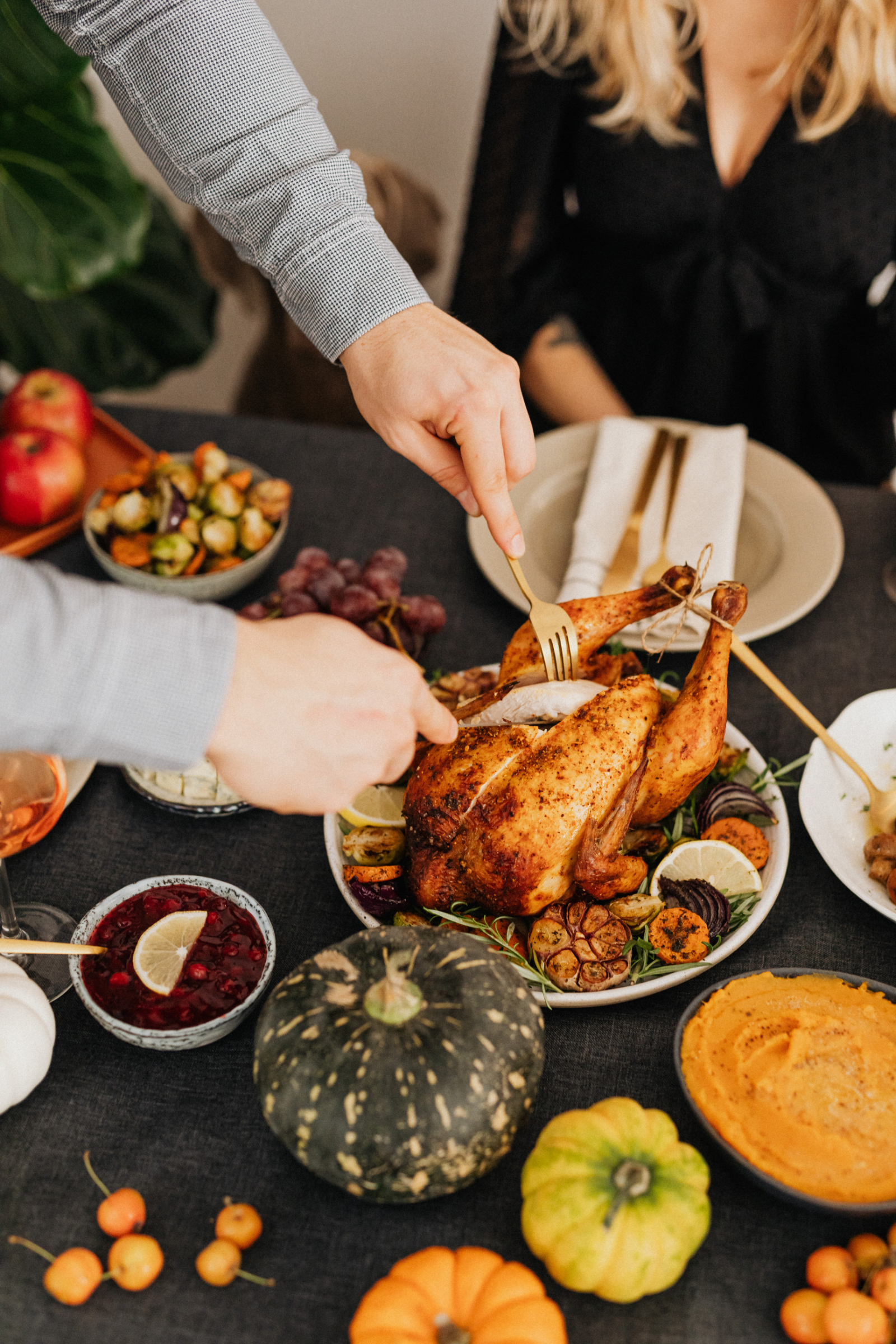
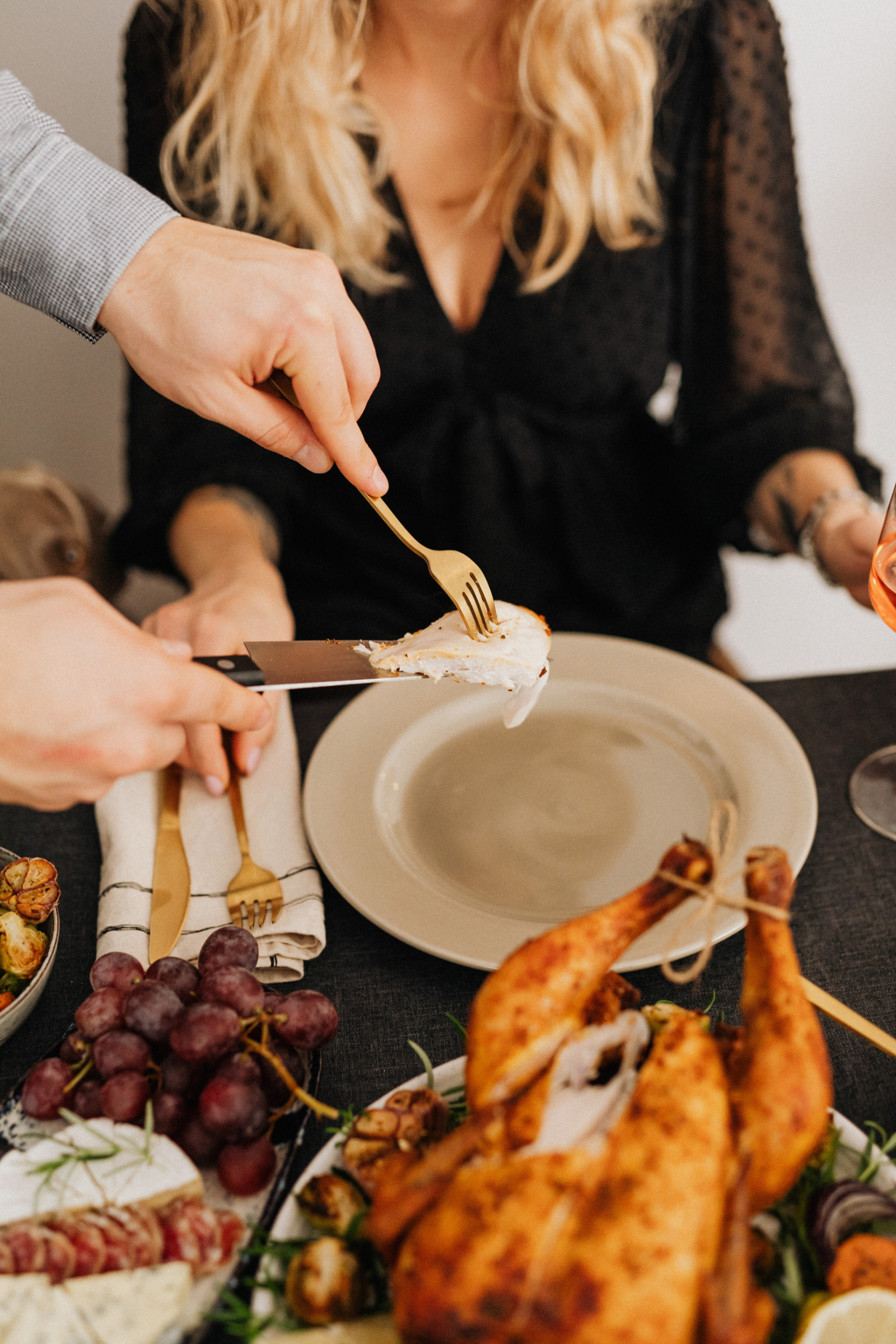
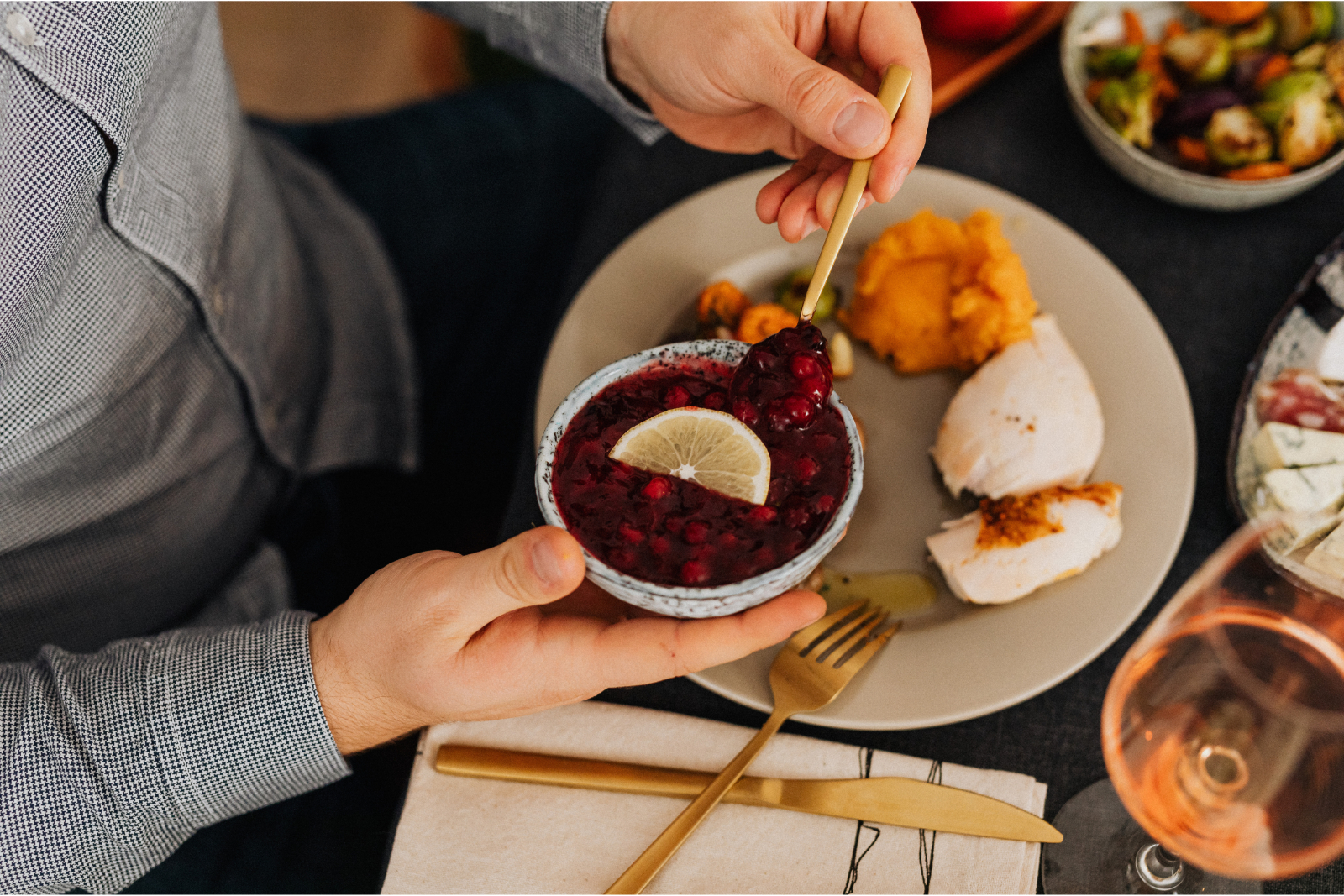
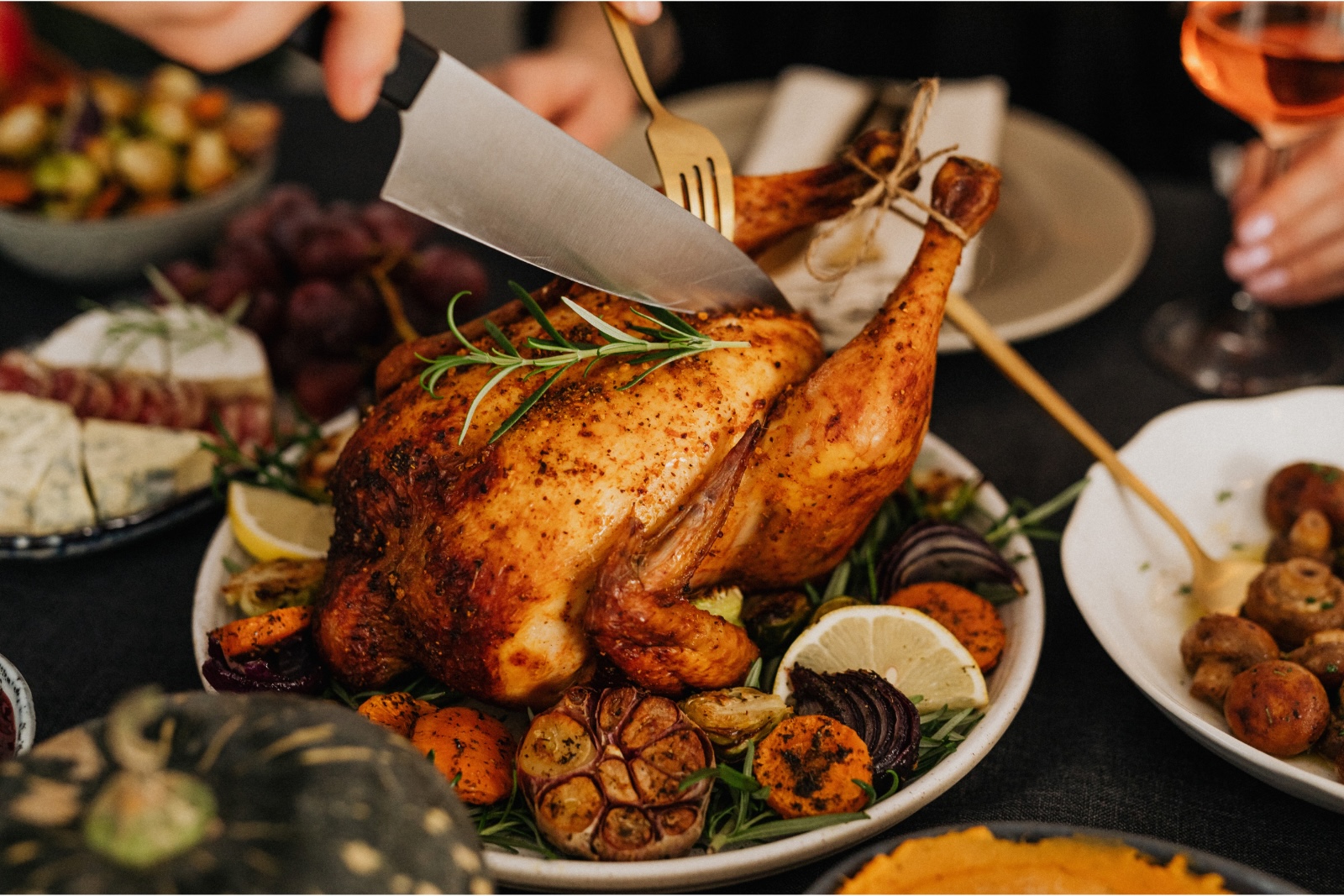
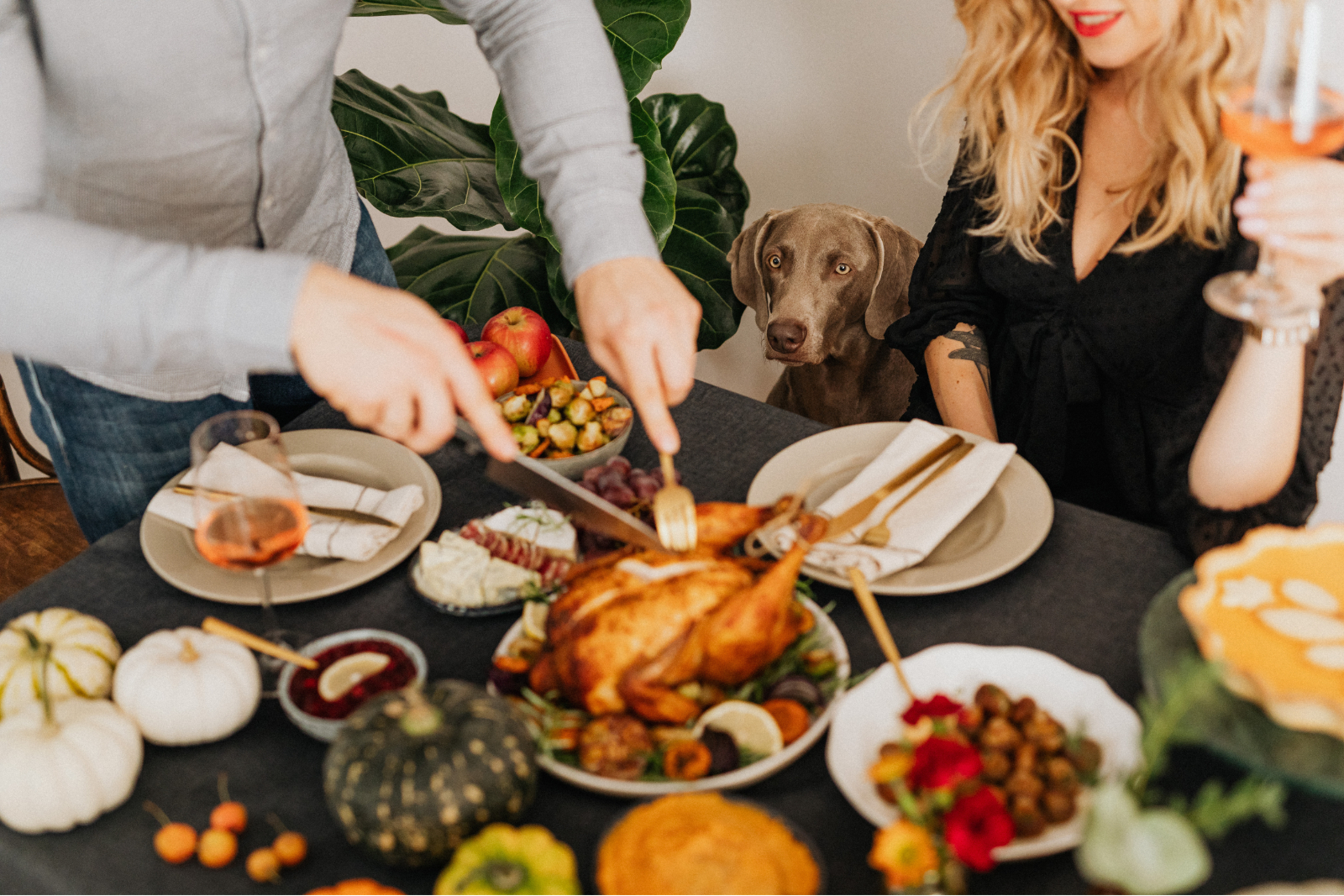
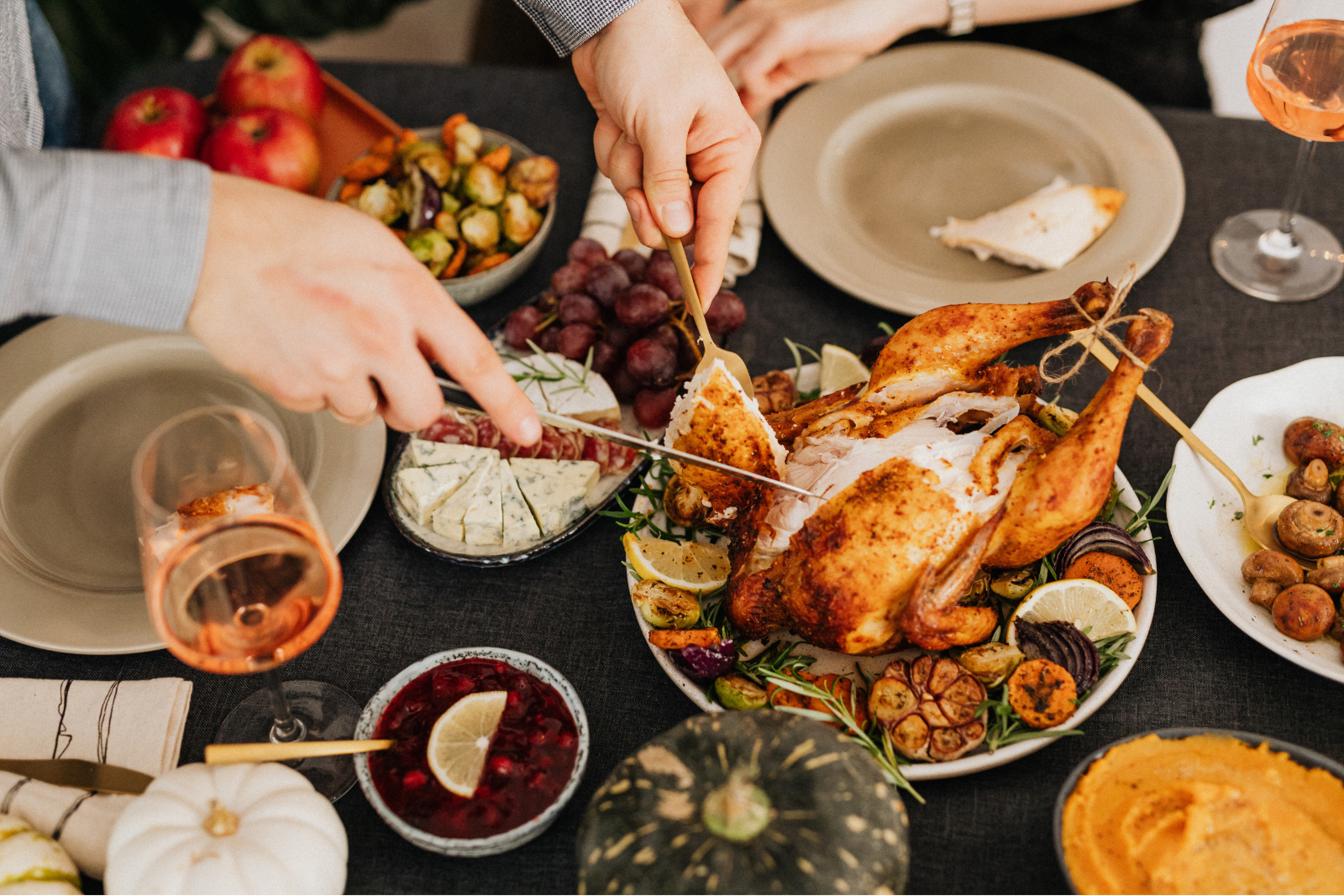
Use a regular dinner plate, not a platter, and go in with a plan. A simple template: start with protein, add a vegetable, then add small spoonfuls of the comfort dishes you love most.
Here is how common Thanksgiving dishes tend to play out.
- Turkey: Your best friend. Lean protein supports muscle and fullness. Choose white meat if you want the lightest option, and go easy on skin and heavy glaze.
- Gravy: A small drizzle gives you the flavor without the fat load. A full ladle is a common nausea trigger.
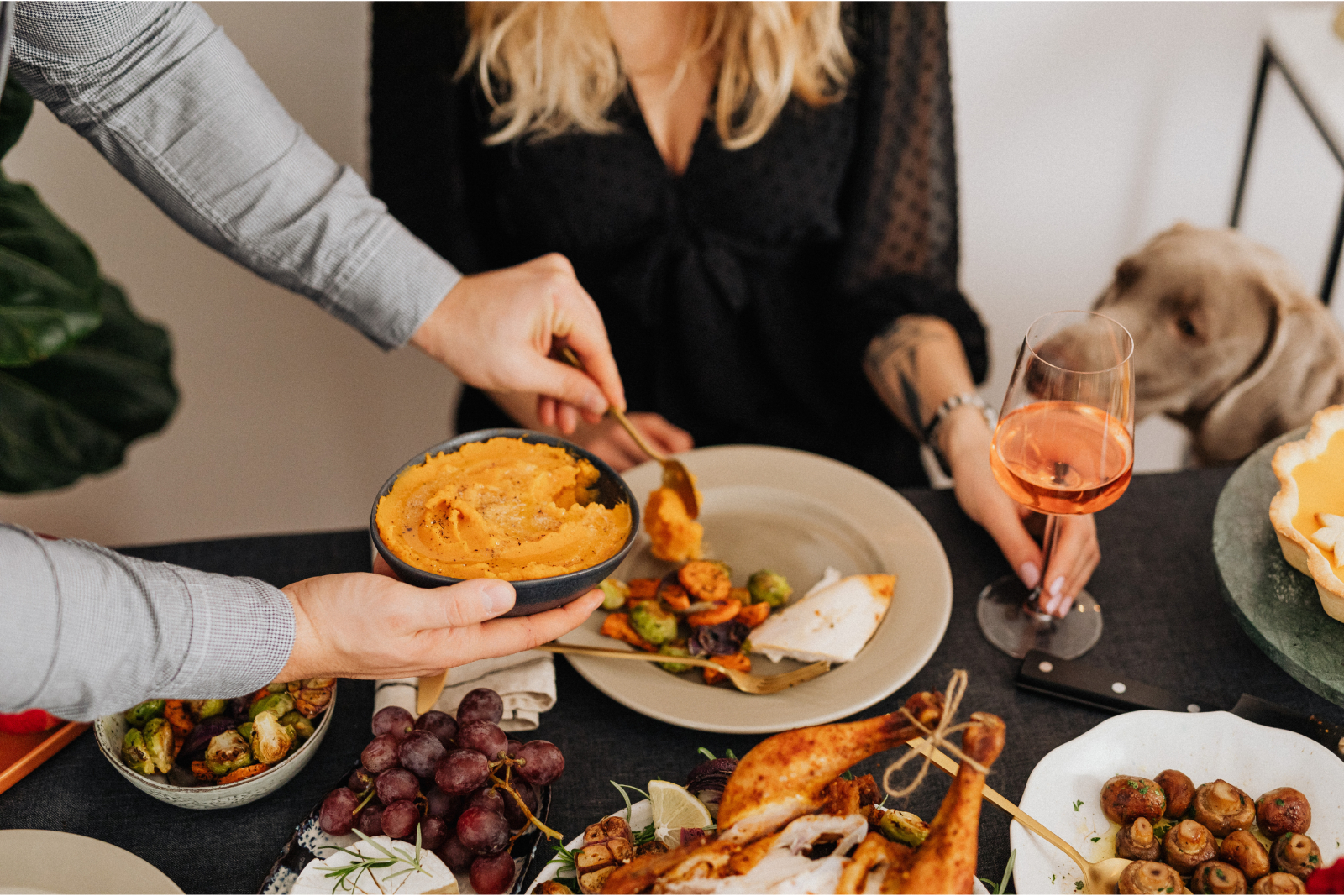
- Mashed potatoes: Take a few spoonfuls, not a mountain. Butter and cream make them rich, so a small portion often feels better than a big one.
- Stuffing: Delicious and usually heavy on butter and refined bread. A small scoop satisfies the craving.
- Green bean casserole: Fresh green beans or roasted vegetables are easier on your stomach than creamy, fried-onion versions. If the casserole is your family favorite, have a small serving and savor it.
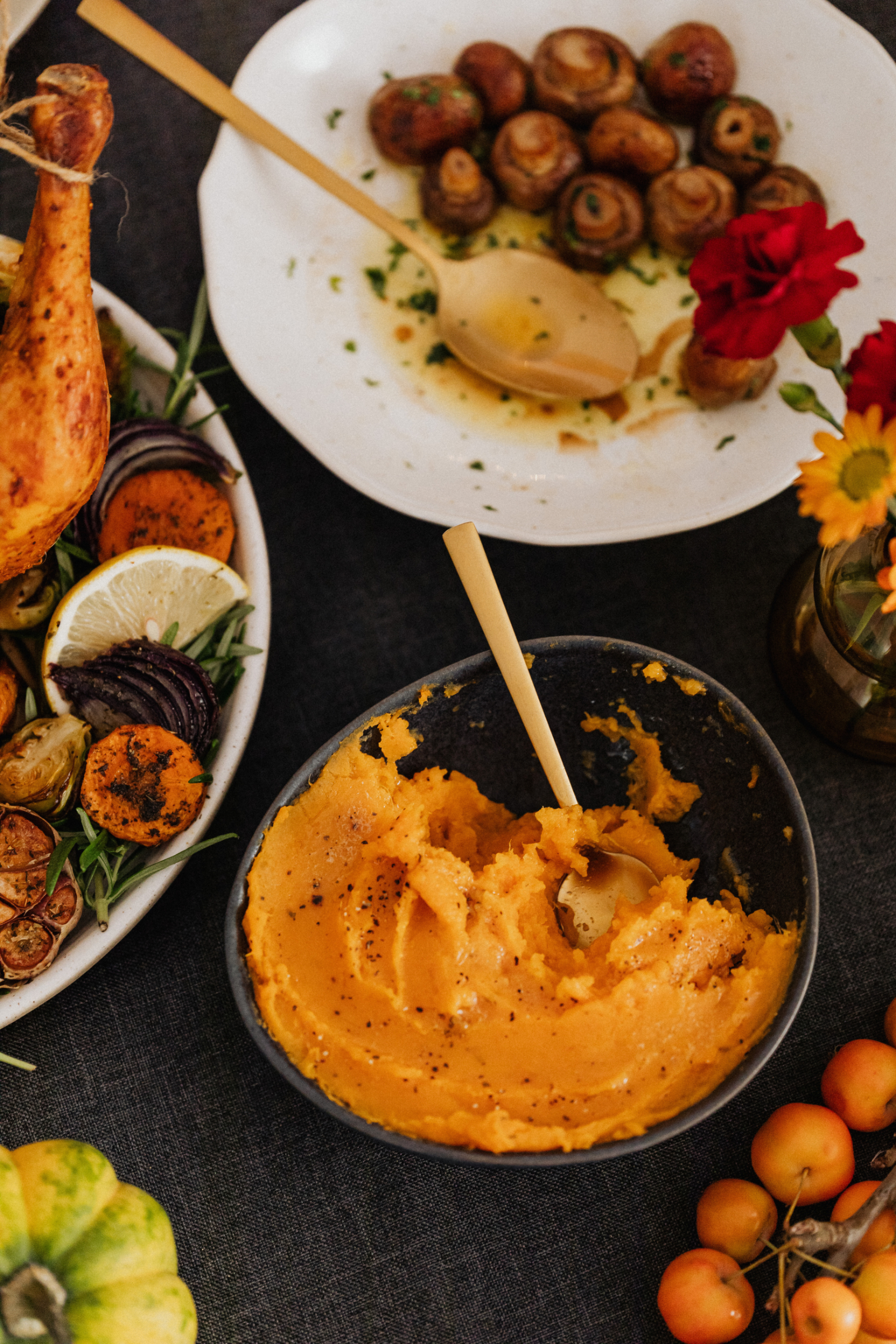
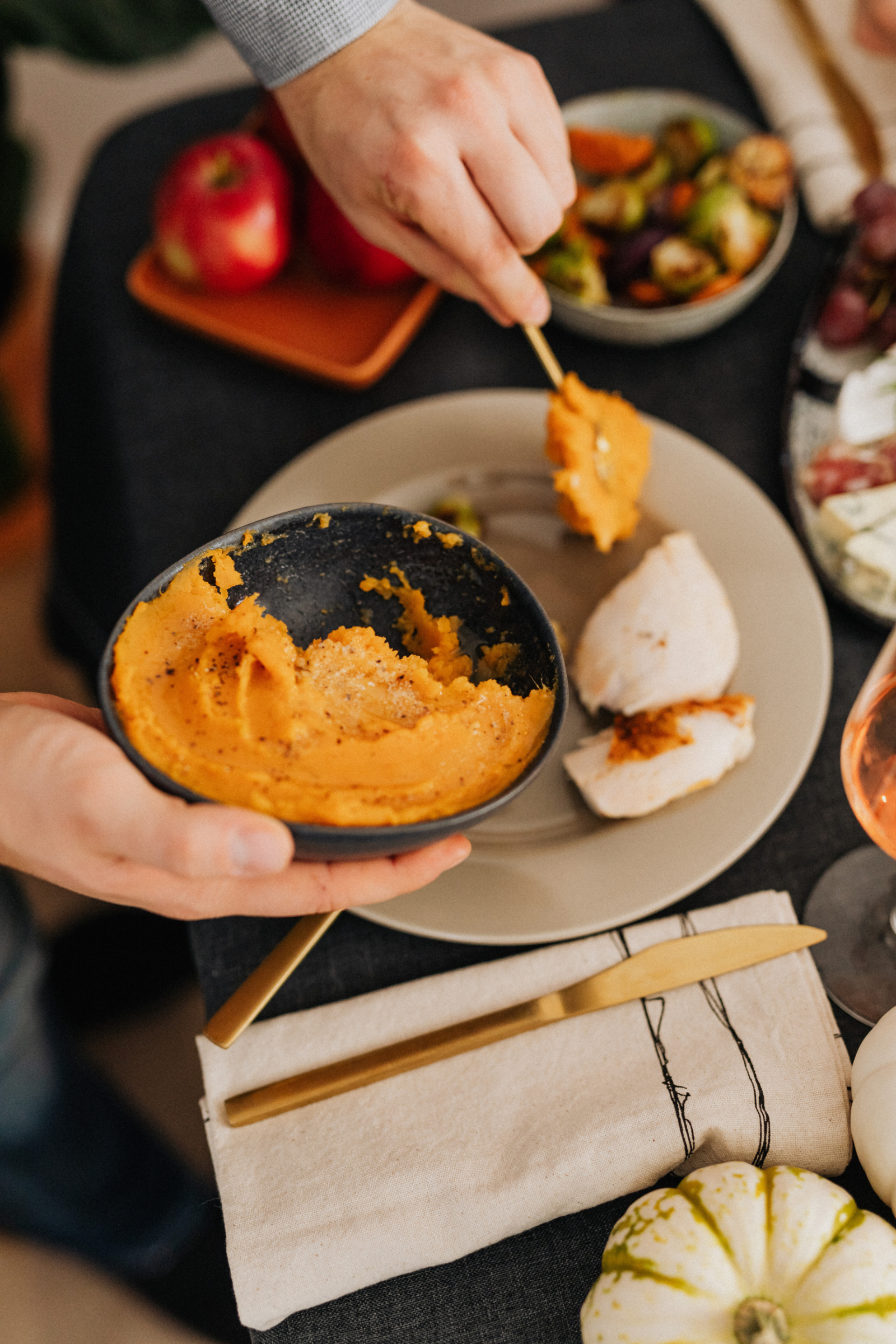
- Sweet potatoes: Plain roasted sweet potatoes are a great pick. Marshmallow-topped versions are very sweet, so keep that portion small.
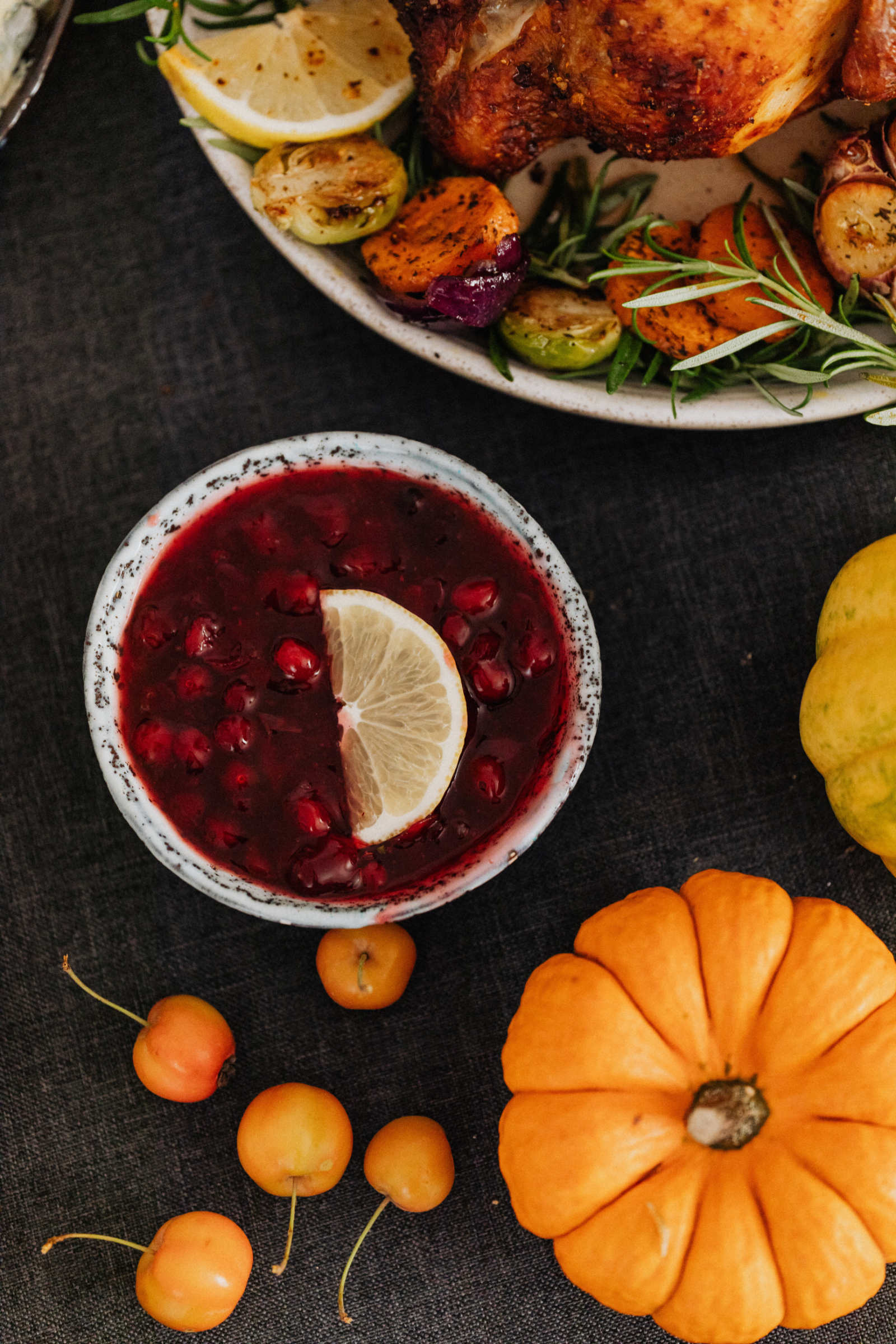
- Cranberry sauce: Tart and light, but sugary. A spoonful is plenty.
- Rolls and bread: Easy to fill up on without noticing. Maybe pick one.
- Vegetables and salad: Roasted Brussels sprouts, carrots and simple salads add fiber and volume. Fiber helps with constipation, but add it gradually if you are not used to it.
A good rule of thumb from dietitians is to put lean protein and fiber-rich foods first, then fill in with richer dishes in small amounts. GoodRx lists high-fat foods, sugary dishes, refined carbs and alcohol as the most common triggers for GLP-1 side effects, so those are the ones to portion thoughtfully.
How to Eat at the Table
What you eat matters, and so does how you eat it.
Slow down.
Because your digestion is already slower, fast eating makes nausea more likely. Take small bites, put your fork down between them and join the conversation.
Pause before seconds.
Your fullness signal can show up late. Wait 15 to 20 minutes before deciding whether you want more. Most of the time, you will not.
Stop at comfortable, not stuffed.
On a GLP-1, the line between satisfied and sick is thinner than it used to be. When you feel pleasantly full, that is your cue.
Skip the guilt.
If you leave food on your plate, that is the medication doing its job. You are allowed to stop.
Drinks and Alcohol on Thanksgiving
Alcohol deserves its own section. Experts generally recommend limiting it on a GLP-1, since it can worsen side effects like nausea and dehydration and may get in the way of the medication working well. Some people also notice they feel the effects of alcohol more quickly. If you take medication for diabetes, alcohol can also raise the risk of low blood sugar, so ask your prescriber what is safe for you.
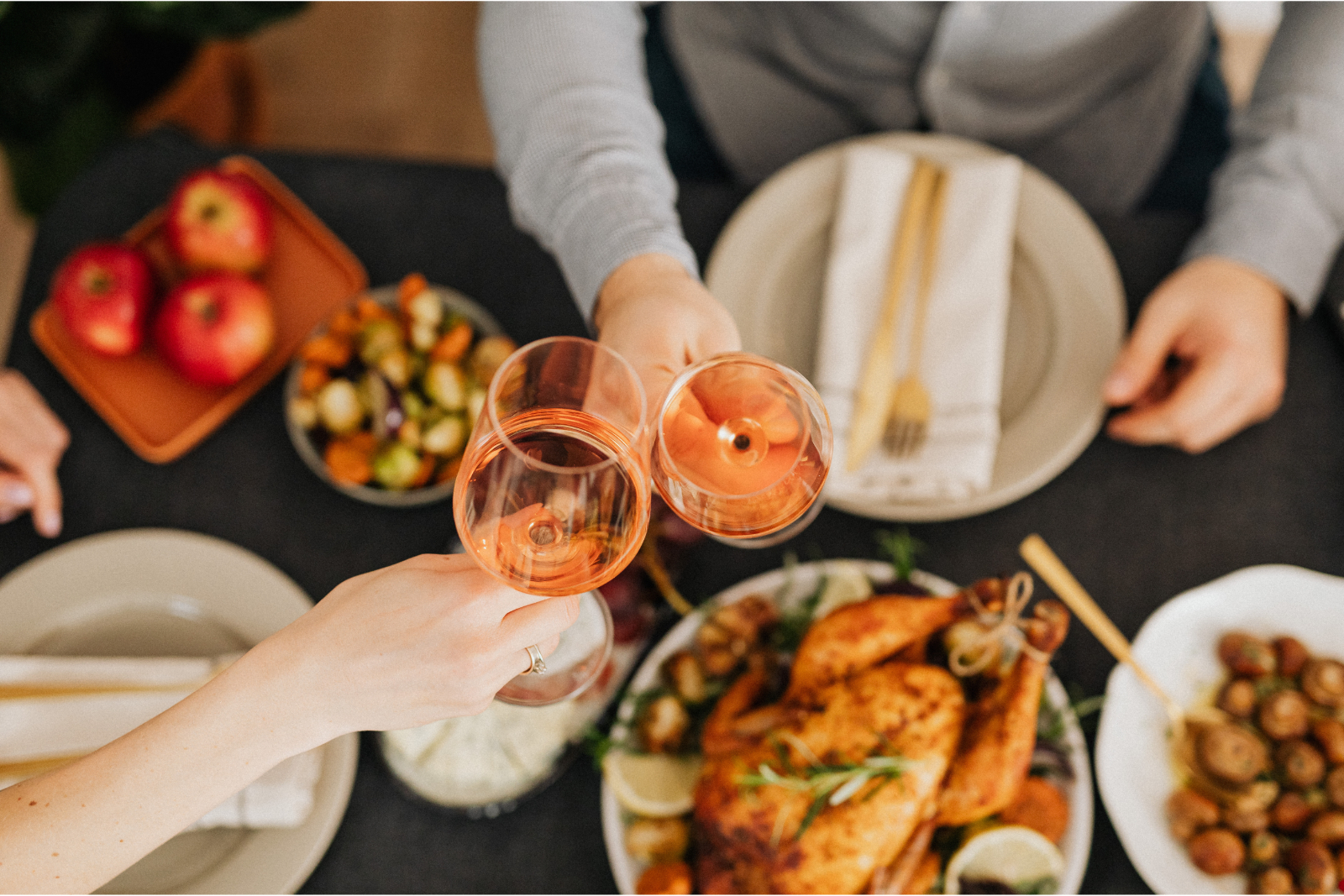
If you do choose to drink, keep it to a small amount, have it with food and alternate with water. If you would rather skip it, a sparkling water with cranberry and a rosemary sprig feels festive and does not cost you anything the next morning.
Sugary drinks like sweet cider and soda can also upset your stomach, so keep those modest too. Plain water, herbal tea and ginger tea are all easy choices.
Dessert Without the Regret
You can have pie. Truly.
Pick the one dessert you actually want, ask for a small slice and eat it slowly. Pumpkin pie is a solid choice because it tends to be less heavy than pecan or cream-based desserts. Skip the “sampler of everything” approach, since small tastes of five desserts add up to a lot of sugar and fat on a stomach that is already working slowly.
If you are too full for dessert, wrap it up and have it later. Pie tastes just as good at 9 pm or on Friday morning.
What to Do If You Start to Feel Sick
Even with a good plan, it can happen. Here is what usually helps:
- Stop eating and put the plate aside.
- Sip water slowly.
- Try ginger or peppermint tea.
- Stay upright and take a gentle walk instead of lying down right away.
- Wait to eat again until you feel settled, then choose something bland, like crackers, toast, rice or broth.
Mild, passing nausea is common. But some symptoms are worth a call to your doctor. Contact your healthcare provider if you have severe or persistent stomach pain, vomiting that won’t stop, signs of dehydration, or fullness and nausea that stay severe for more than a day. Severe abdominal pain, especially pain that radiates to your back, needs prompt medical attention. When in doubt, call.
Don’t Let One Meal Feel Like Falling Off the Wagon
Many people on a GLP-1 worry that one big holiday meal will undo their progress. A single Thanksgiving dinner is not a setback. Progress is built by what you do most of the time, not by one day.
The real risk is the spiral that follows: skipping meals on Friday to “make up for it,” or deciding the whole season is a lost cause. Neither helps.
The next day, go back to your normal routine. Eat regular, balanced meals with protein, drink plenty of water, take a walk and take your medication on schedule. That is the whole recovery plan.
Leftovers are your friend here. A small plate of turkey, roasted vegetables and a little stuffing on Friday is a great, comfortable meal.
Handling Pushy Relatives and “Have Some More!”
Holidays often come with well-meaning food pressure. A few easy lines help:
- “That was delicious. I’m perfectly full, thank you.”
- “I’m saving room for pie. Can I get a slice to go?”
- “I’m taking it slow today, but I’d love to take some leftovers home.”
You do not owe anyone an explanation about your medication. If you want to share, great. If not, a warm, cheerful no is enough.
Thanksgiving on a GLP-1: Frequently Asked Questions
Can I eat Thanksgiving dinner while on Ozempic, Wegovy, Mounjaro or Zepbound?
Yes. Most people can enjoy their favorite holiday foods in smaller portions. The goal is to avoid overloading a stomach that empties slowly, not to avoid the meal.
Why do I feel sick after eating small amounts of rich food on a GLP-1?
GLP-1 medications slow stomach emptying, and fatty foods slow it further. Together, they can cause nausea, bloating and discomfort even after modest portions.
Should I skip my GLP-1 dose before Thanksgiving?
No. Routine dosing is recommended, and skipping can affect your results. If you have questions about timing, ask your prescriber.
What are the best Thanksgiving foods on a GLP-1?
Lean turkey, roasted vegetables, salads, plain sweet potatoes and other protein-rich and fiber-rich dishes tend to be the most comfortable. Richer dishes like gravy, casseroles and cream-based sides are best in small portions.
Can I drink alcohol on Thanksgiving while taking a GLP-1?
It is best to limit it. Alcohol can worsen nausea and dehydration. If you drink, keep it small, pair it with food and drink water in between. Ask your doctor what is appropriate for you.
What should I do if I overeat?
Stop eating, sip water, try ginger or peppermint tea and stay upright. Return to normal meals the next day. If symptoms are severe or last more than a day, contact your healthcare provider.
The Bottom Line
Thanksgiving on a GLP-1 is less about restriction and more about pacing. Eat gently earlier in the day, start with protein, keep portions small, sip water and stop when you are comfortably full. Pick the dishes that matter most to you and really taste them.
You can enjoy the turkey, the pie and the people around the table, and still feel good when the dishes are done. Happy Thanksgiving.
This article is for general information and is not medical advice. GLP-1 medications affect people differently, so check with your prescriber, pharmacist or a registered dietitian about your dose, your health conditions and what is right for you.